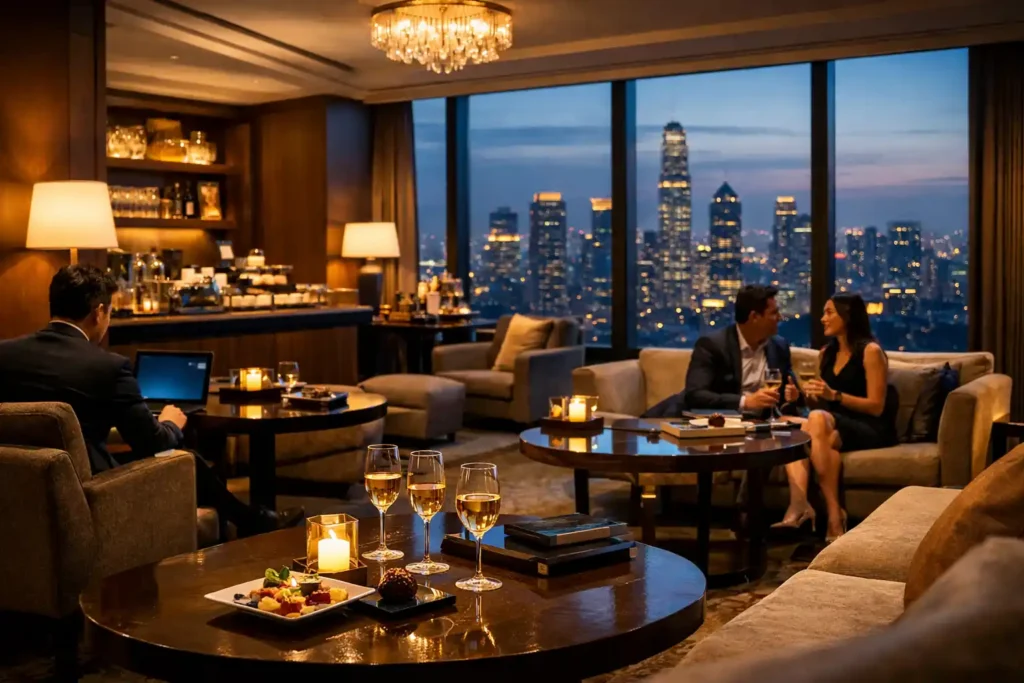
Luxury City Hotels with Executive Lounge Access
Why Executive Lounge Access Has Become a Premium Travel Essential
Luxury travel has changed in a way that feels both subtle and dramatic. A few years ago, many affluent travelers judged a hotel mainly by its suite design, its restaurant lineup, or the glamour of its address. Today, that lens is much wider. Travelers with high purchasing power increasingly expect personalization, VIP treatment, seamless service, and private experiences that reduce friction from arrival to departure. Visa’s 2025 affluent travel trend report says personalization is now the baseline, while exclusive access and VIP treatment are expected, not treated as rare bonuses. Travel Weekly also reports that luxury travelers are prioritizing comfort, convenience, privacy, and attentive service over price-led thinking. That matters because luxury city hotels with executive lounge access sit exactly at the intersection of those expectations: they combine location, exclusivity, loyalty value, and practical convenience in a format that serves both premium leisure and executive travel extremely well.
Urban luxury hotels are also benefiting from solid performance momentum. CBRE’s 2025 global hotel outlook expects U.S. RevPAR growth of 2%, supported by modest gains in international visitation and group demand, while hotel industry coverage around CBRE’s forecast highlights that urban markets are expected to outperform resorts in 2025. That tells you something important: the modern premium traveler is still strongly drawn to global cities where finance, culture, dining, luxury retail, and business networking overlap. In that setting, an executive lounge is not just a nice extra. It becomes a strategic part of the stay, almost like a private members’ club embedded inside a five-star hotel. It gives travelers a quieter zone, a more controlled pace, and a layer of convenience that can turn a premium booking into a genuinely high-value one.
The Shift Toward Privacy, Comfort, and Personalization
The old version of luxury hospitality often emphasized visible formality. The newer version leans toward tailored ease. Condé Nast Traveler’s 2025 travel trend coverage notes that luxury hospitality is moving toward private, personalized experiences with greater flexibility and home-like comfort. That shift explains why executive lounges have become more relevant rather than less. A well-run lounge creates a semi-private environment inside a busy city hotel. Instead of joining the full breakfast rush downstairs, a traveler can have breakfast in a controlled setting. That of waiting in a crowded lobby before a late-night airport transfer, they can sit somewhere quiet, connected, and discreet. Instead of treating food and beverage as separate spending decisions throughout the day, the lounge can bundle convenience into the room experience in a way that feels elegant rather than transactional.
This is especially attractive for international luxury travelers who may be juggling investor meetings, brand events, fine dining reservations, embassy appointments, family schedules, or last-minute flight adjustments. In that world, time becomes more valuable than tiny differences in rate. That is one reason high-end hospitality advertisers and premium finance advertisers alike value content around executive travel, luxury hospitality, wealth travel, premium rewards, VIP airport transfer, private banking lifestyle, and elite loyalty programs. These are not bargain-hunting search patterns. They reflect audiences with stronger commercial intent and higher-value purchasing behavior. A hotel lounge, then, is not just a breakfast room with nicer chairs. It is part of a broader luxury ecosystem built around efficiency, discretion, and privilege.
What Executive Lounge Access Really Means in a Luxury City Hotel
At a basic level, executive lounge access means access to a private or semi-private club space usually reserved for club-floor guests, eligible suite guests, or travelers holding certain elite loyalty status. But the real meaning is richer than that. A quality executive lounge usually includes breakfast, snacks, evening cocktails or canapés, premium coffee and tea, high-speed Wi-Fi, work-friendly seating, and more personalized service. The Points Guy’s 2025 overview notes that lounge access often includes complimentary food, drinks, comfortable seating, Wi-Fi, business-oriented facilities, and in some cases services such as garment pressing. Marriott states that lounge access is a benefit for qualifying Platinum Elite, Titanium Elite, and Ambassador Elite members at participating brands, while Accor notes lounge access for Platinum members and above at participating properties, with special terms for some Fairmont lounges. In other words, lounge access can be obtained through room type, rate plan, or status strategy.
That distinction matters because smart luxury travelers do not book blindly. They check whether the lounge is truly operational, whether it serves full breakfast or only continental options, whether evening service is substantial or symbolic, and whether access extends to accompanying guests. Some lounges are magnificent: skyline views, refined buffet spreads, business nooks, and concierge-level attention. Others are modest and should not justify a meaningful rate premium. The phrase club access can sound uniform across brands, but the experience is anything but uniform. Think of it like two watches that both tell time: one is functional, the other becomes part of your identity. The difference is in craftsmanship, service rhythm, and the invisible details that remove effort from the guest experience.
Signature Benefits That Define a True Club-Level Experience
A true club-level experience should feel curated, not improvised. Travelers who pay premium rates or hold top-tier status are not chasing free crackers and soft drinks. They are paying for service compression: faster arrival, better access to staff, smoother dining, quieter seating, and more control over their schedule. That is why the best executive lounges often include private or in-room check-in, all-day refreshments, evening cocktail presentations, meeting-friendly tables, and personalized concierge support. The Four Seasons Hotel Jakarta explicitly highlights benefits such as personalized in-room check-in and complimentary cocktails under its club benefits, while The Langham, Jakarta lists personalized concierge services, garment pressing, and curated club privileges. These are not random perks. They address exactly the friction points that matter most to premium city travelers.
There is also a psychological dimension here. Luxury is not only about visible opulence. It is often about reducing noise. An executive lounge creates a sense of selective access, and that emotional effect is powerful. It says the guest is not simply staying in the building; the guest has entered a more private layer of the property. For a finance executive, wealth manager, legal advisor, founder, diplomat, or luxury-focused traveler, that sense of controlled exclusivity often feels more valuable than one extra decorative feature in the room. The hotel becomes less like a temporary room rental and more like a secure urban base. That is precisely why premium travel insurance, luxury credit cards, elite rewards programs, and high-net-worth travel planning frequently intersect with club-floor demand. The traveler who cares about those products is usually the same traveler who values lounge access.
Premium Facilities That Separate Ordinary Luxury from Real Exclusivity (Luxury City Hotels)
The best luxury city hotels know that a room alone rarely carries the entire premium story. What separates ordinary luxury from genuine exclusivity is the layer around the room: private arrival, protected privacy, superior service response, and thoughtful food-and-beverage access. A polished executive lounge often anchors all of that. It can become the place where a guest starts the morning with a quieter breakfast, holds an informal client chat in the afternoon, and unwinds with canapés and cocktails in the evening without ever stepping into a noisy public bar. Onemileatatime’s lounge guide notes that some lounges include breakfast, afternoon tea, evening service, and all-day snacks, while business-travel-focused coverage emphasizes power access, Wi-Fi, and a productive environment as core strengths. That combination makes the lounge especially relevant in financial districts, diplomatic neighborhoods, and luxury retail corridors where time efficiency and discretion matter.
There is also a real value conversation to be had. If a traveler would otherwise pay separately for breakfast, coffee meetings, evening drinks, pressing, and occasional concierge support, a well-priced club-level rate can deliver meaningful bundled value without feeling cheap or utilitarian. This is where premium hotel selection becomes a skill rather than a simple purchase. You are not asking, “Is this the cheapest luxury room?” You are asking, “Does this stay consolidate enough premium benefits to justify the rate with comfort, privacy, and efficiency?” That framing is much more aligned with affluent traveler behavior and with the sort of high-commercial-intent keyword environment that performs well in premium travel publishing.
Private Check-In, Curated Dining, and Elevated Concierge Service (Luxury City Hotels)
Private check-in is one of those benefits that sounds small until you have experienced it after a long international flight. When it works well, it changes the emotional temperature of arrival. Instead of waiting at a front desk queue with every other guest, the traveler is handled in a quieter, more personalized way. Four Seasons Jakarta specifically promotes personalized in-room check-in as part of its club benefits, showing how top-tier hotels use lounge-related privileges to reshape the arrival ritual itself. The Langham, Jakarta’s club benefits similarly emphasize personalized service and garment pressing, reinforcing the idea that executive lounge access belongs to a broader package of premium hospitality rather than a single room entry rule.
Curated dining is equally important. A proper lounge should not feel like a vending machine disguised as a luxury perk. It should offer an atmosphere where breakfast is calm, refreshments are refined, and evening service feels intentionally designed. That does not necessarily mean excess. In fact, the most elegant lounges often succeed through restraint: excellent coffee, polished presentation, a measured cocktail hour, and staff who remember guest preferences. Add concierge support that can secure a car, handle a same-day pressing request, suggest a fine-dining table, or smooth out a complicated itinerary, and the lounge stops being a side feature. It becomes part of the hotel’s operating intelligence. That is exactly the kind of experience international luxury travelers remember and return for.
Real Examples of Luxury City Hotels Offering Executive Lounge Value (Luxury City Hotels)
Real examples make the concept easier to trust. Four Seasons Hotel Jakarta offers club benefits that include personalized in-room check-in and complimentary cocktails, positioning lounge access as a refined service layer rather than a simple food amenity. The Langham, Jakarta highlights a club experience with garment pressing, international newspapers access, and personalized concierge attention. These examples show what premium travelers should actually look for: benefits that save time, preserve polish, and support the guest’s schedule. A lounge that only promises “exclusive ambiance” without meaningful service utility is not enough in the upper end of the market.
There are also broad global ecosystems that matter. Marriott’s published guidance shows lounge access tied to upper-level elite status at participating brands, while Accor provides published lounge-access benefits for eligible elite members at participating hotels. This matters for travelers who move frequently between Singapore, Dubai, London, Tokyo, Jakarta, Paris, New York, or Hong Kong. In those cases, lounge access becomes part of a repeatable premium strategy. A traveler can book within a known brand family and understand, at least broadly, the value layer they are entering. That consistency is powerful for executives, founders, private wealth clients, and experienced international travelers who want reliable benefits across markets.
| Hotel / Brand Example | Published Lounge or Club Signal | Why It Matters |
|---|---|---|
| Four Seasons Hotel Jakarta | Personalized in-room check-in and complimentary cocktails | Strong indicator of private arrival and premium service layering |
| The Langham, Jakarta | Garment pressing, concierge service, club privileges | Useful for polished business and social travel needs |
| Marriott participating brands | Lounge access for eligible elite tiers at participating hotels | Valuable for frequent international travelers using loyalty strategy |
| Accor participating brands | Lounge access for Platinum and above at participating hotels | Reinforces elite-value planning across major cities |
How Smart Travelers Choose the Right Luxury Lounge Hotel (Luxury City Hotels)
Choosing the right luxury city hotel with executive lounge access is not just about selecting the most famous brand. It starts with the purpose of the trip. A traveler visiting for finance meetings, investor roadshows, or corporate negotiations may need a lounge with strong business functionality: reliable Wi-Fi, quiet corners, easy power access, early breakfast, and efficient staff support. A couple on a luxury city escape may care more about skyline views, champagne service, relaxed evening canapés, and a sense of privacy after a day of shopping, dining, or gallery visits. That is why the best booking decision always matches the lounge profile to the trip profile. Luxury is not one-size-fits-all; it is precision.
The second step is evaluating value beyond the rate. Many travelers make the mistake of comparing only headline nightly prices. A smarter comparison asks what is operationally included. Does the room include breakfast? Does lounge access cover one guest or two? Are evening drinks substantial? Is there concierge assistance? Is pressing included? If a club room rate looks 20% higher than a standard room but effectively absorbs several premium costs and improves the overall rhythm of the stay, it may actually be the sharper decision. This is where premium rewards cards, elite travel status, luxury travel advisory, and executive travel planning all become relevant. The most sophisticated travelers treat these as interconnected tools, not isolated purchases.
Why Executive Lounge Access Matters for High-End Business Travel (Luxury City Hotels)
Business travel at the upper end has never been only about meetings. It is also about positioning, readiness, and the ability to move through a city without friction. An executive lounge supports that perfectly. It offers a soft meeting zone, a place to reset between appointments, and a more discreet alternative to public spaces. Coverage focused on executive lounges consistently points to essentials such as Wi-Fi, seating comfort, and access to power, while broader lounge analysis shows that food and beverage convenience remains a major benefit. Put simply, the lounge becomes a private operating base inside the hotel.
There is a real-world example behind this. Imagine an international private equity advisor arriving in Jakarta for two days of back-to-back meetings. A standard luxury room gives comfort, but a club-level room gives a better operating system: expedited arrival, an easy breakfast before the first car pickup, a quiet zone to review documents, evening refreshments after negotiations, and quick pressing before a dinner appointment. None of that feels flashy on paper, yet together it can transform performance and perception. That is why business class travel, corporate hospitality, premium concierge, wealth management travel, and executive accommodation are commercially valuable search themes. They speak to travelers for whom time, polish, and discretion are directly tied to outcomes.
Why Executive Lounge Access Also Elevates Luxury Leisure Travel (Luxury City Hotels)
It would be a mistake to think lounges matter only to business travelers. For premium leisure travelers, the value is different but equally compelling. A lounge can create a calmer start to the day, particularly in large city hotels where public breakfast areas can become busy and noisy. It can also provide a graceful pause in the late afternoon before dinner, with refreshments, skyline views, and a quieter social atmosphere. Travel Weekly’s luxury findings emphasize comfort, privacy, and ease as key booking drivers, while Visa’s affluent travel reporting highlights the expectation of exclusive access and personalized experiences. Those priorities map beautifully onto the best luxury lounges.
Picture a couple in London, Singapore, or Tokyo staying in a premium city hotel for a long weekend. They spend the day exploring designer boutiques, museums, and signature restaurants. By early evening, the lounge becomes a refined bridge between the city and the night ahead. They return, freshen up, enjoy a drink and canapés in a quieter space, ask the concierge to confirm a reservation, and head out without the stress of re-entering a crowded lobby scene. The experience is not about saving money. It is about preserving mood. The lounge functions like a hidden terrace in the middle of an urban symphony, a place where the volume drops and the travel experience feels more controlled, more elegant, and more personal.
Common Mistakes to Avoid When Booking Club-Level Stays (Luxury City Hotels)
One common mistake is assuming every “executive lounge” is equally luxurious. Brand standards vary, and even within the same brand, properties can differ widely in service style, food quality, opening hours, and guest access rules. Another mistake is failing to compare the value of elite status benefits versus simply paying for the lounge-enabled room category. Sometimes a loyalty-based access path offers stronger value; other times the paid club room is the cleaner choice, especially if traveling with someone whose access may not be fully covered. Marriott and Accor both make it clear that participation and benefits can vary by property, which is exactly why travelers should verify details before booking.
A third mistake is treating lounge access like a decorative add-on instead of part of the trip strategy. The best results come when the traveler intentionally uses it: for breakfast timing, informal client conversations, decompression, service requests, and schedule smoothing. That is where the value multiplies. A lounge is like a tailored jacket. It can hang in the closet and look impressive, or it can be worn in exactly the right context and suddenly make everything work better. Smart luxury travelers book with purpose, read the benefit details, and choose hotels where club access genuinely supports the style of trip they are taking.
Conclusion (Luxury City Hotels)
Luxury city hotels with executive lounge access are no longer niche choices reserved for a narrow slice of travelers. They have become one of the clearest expressions of modern premium hospitality because they combine what affluent international travelers want most right now: privacy, personalization, comfort, service efficiency, and exclusive access. Current travel reporting shows that luxury demand is increasingly shaped by quality, ease, and VIP treatment rather than simple prestige signaling. At the same time, urban hotel performance remains resilient, which keeps city-based luxury stays highly relevant for both business and leisure travel.
The real appeal of executive lounge access is that it turns luxury from something visible into something usable. It does not just look premium; it behaves premium. A good lounge saves time, protects energy, supports discretion, and adds rhythm to the stay. Whether the traveler is closing deals, attending private events, or simply enjoying a refined city escape, the right club-level hotel can feel less like a room booking and more like access to a better version of the city itself. That is the standard premium travelers should aim for now.